
Welcome to the Rural Road to Health Podcast!
Here we will travel along the rural road to health through conversations with students, clinicians, researchers, policy makers, advocates; people that live and work in rural areas around the world. Through these conversations we will try to gain insights into the current state of affairs in rural health globally and explore ideas that could help us move towards better access to health services for all communities.


Profs Sarah & Roger Strasser – Adventures in Rural Health Education & Research – Rural Road to Health
- Profs Sarah & Roger Strasser – Adventures in Rural Health Education & Research
- Prof Bill Ventres – Healthcare on the Margins & Storylines of Family Medicine
- Heather Sherriffs & Dan Martin – ScotGEM & Rural Training on the Orkney Islands
- Dr Iva Petricusic – Rural Health in Croatia
- Prof Bruce Chater – A Story of Rural Generalism
Profs Sarah & Roger Strasser are a trailblazing couple in rural health, rural health education and rural health research.
They share their experiences and perspectives on their rural health careers, involvement in medical education and rural health research.
Available 20th June 2025.
Prof Bill Ventres is a family physician, medical anthropologist and (recently retired) Distinguished Chair of Rural Family Medicine at the University of Arkansas in the USA.
He shares the insights he has gained over his career on working with people at the margins, the storylines of family medicine and solutions for rural workforce development.
Available 10th June 2025.
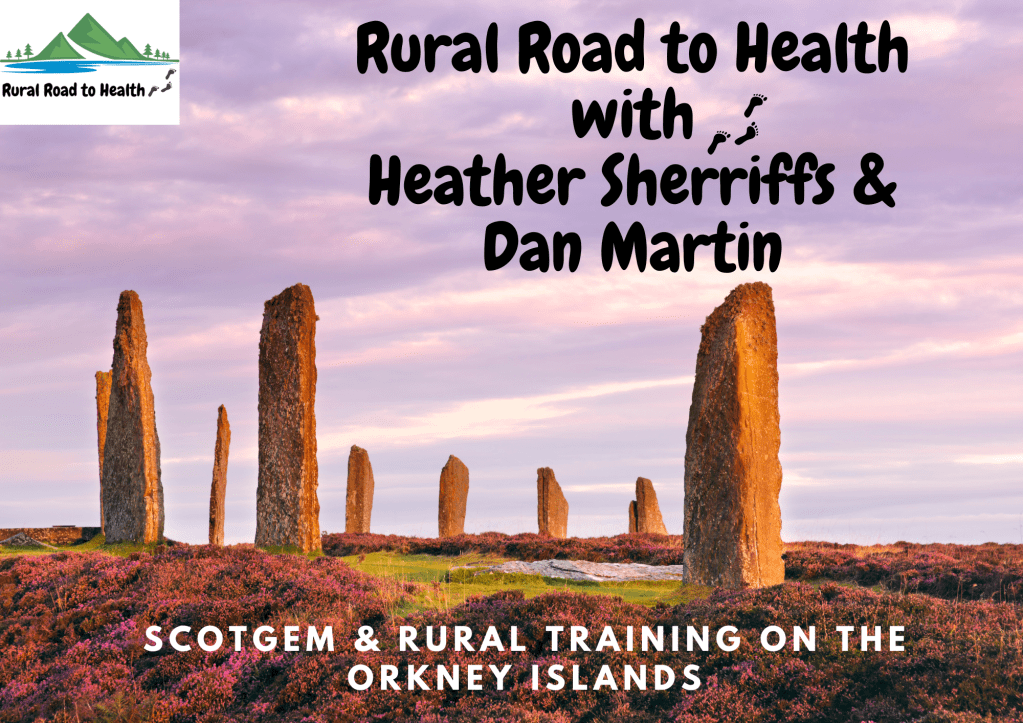
Heather Sherriffs & Dan Martin are medical students on the ScotGEM training pathway.
They share their experience of graduate entry medical training in Scotland, their placement on the Orkney Islands and how this is shaping their thoughts about their future careers.
Available 30th May 2025.
Dr Iva Petricusic is a rural family doctor form Croatia. She is the vice chair of the young doctor committee of the Croatian Medical Chamber and a coordinating member of EUROPREV.
She talks about her experience working as a rural family doctor in Slavonia and what has been done to improve recruitment and retention in rural and island communities.
Available 20th May 2025.
Prof Bruce Chater is a rural generalist, Head of the Mayne Academy of Rural and Remote Medicine Clinical Unit in Queensland, Australia, and the Chair of Rural WONCA.
He talks about the experience of working in the same town for 40 year, as well as his contribution to rural medicine in Australia and internationally through advocacy and development of rural medical education.
Available 10th May 2025.

Ashley Lambert is a medical student from the University of Swansea in Wales who is currently on the Rural Health in Medical Education track (RHiME).
She talks about her experience on rural placement and how this is shaping her views on her future career.
Available 30th April 2025.
Dr Jane George is a health workforce consultant and academic from New Zealand, specialising in rural workforce and the Allied Health, Scientific, and Technical professions.
She talks about her research into recruitment and retention of allied health professionals in rural areas.
Available 20th April 2025.
A/Prof Malin Fors is a psychotherapist, author and Associate Professor at the Arctic University in Norway.
She talks about her research into power dynamics and intersectionality in rural areas and we discuss the concept of “potato ethics” and “geographical narcissism”.
Available 10th April 2025.
Satu Pirskanen is a Project Manager at the Savonia University of Applied Sciences in Finland.
She talks about rural health in Finland and the Attraction in Elderly Care Project.
Available 30th March 2025.
The team of the Virtual Health Hub in Saskatchewan, Canada: Dr Ivar Mendez, Dr John Michael Stevens, Dr Victoria Sparrow-Downes and Joey Deason. They tell us about how they are integrating virtual care and technology into rural health services in Canada.
Available 20th March 2025.
Professor Janessa Graves is the Director of the WWAMI Rural Health Research Centre at the University of Washington. She tells us about rural health research in the USA.
Available 10th March 2025.
Dr Bethan Setphens, a GP and Director of Community Learning and Dr Katie Webb, a psychologist, and a Professor of Medical Education at Cardiff University, tell us about Longitudinal Integrated Clerkships in Wales and the upcoming CLIC conference.
Available 28th February 2025.
Professor Karen Flegg is a rural general practitioner and academic from Australia. She is also the current president of WONCA, the world organization of family doctors. We talk about leadership and rural health.
Available 20th February 2025.
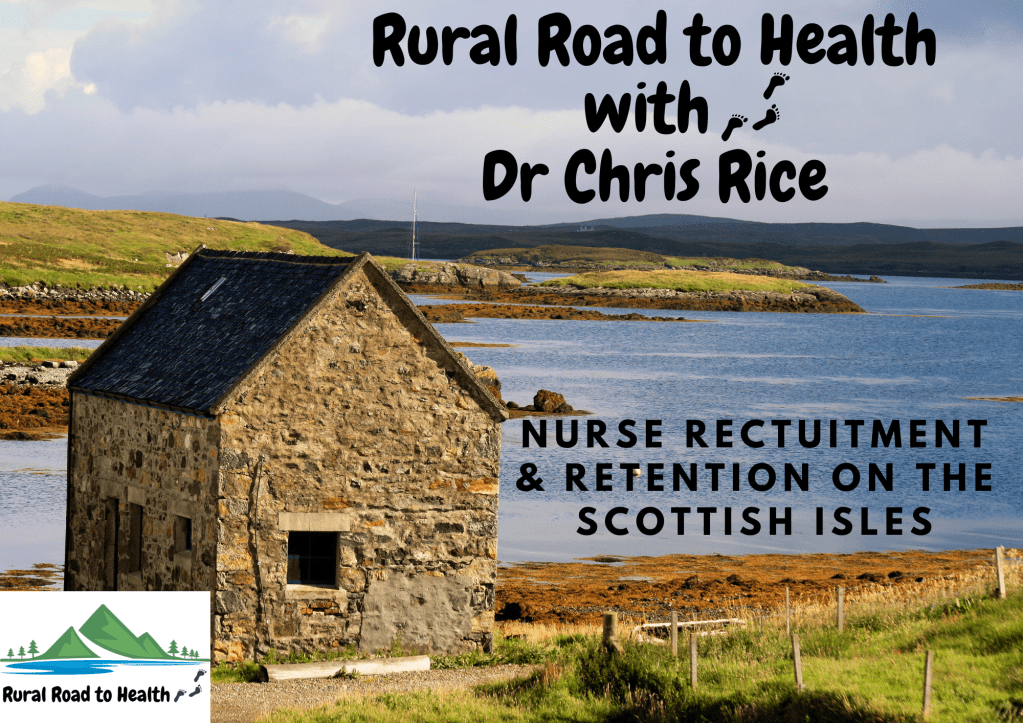
Dr Chris Rice is a qualified paramedic and Associate Head of Postgraduate Medicine at Edge Hill University in Lancashire. We discuss his doctoral thesis which explored the recruitment and retention of nurses staff across northern Scotland’s non doctor islands.
Available 10th February 2025.
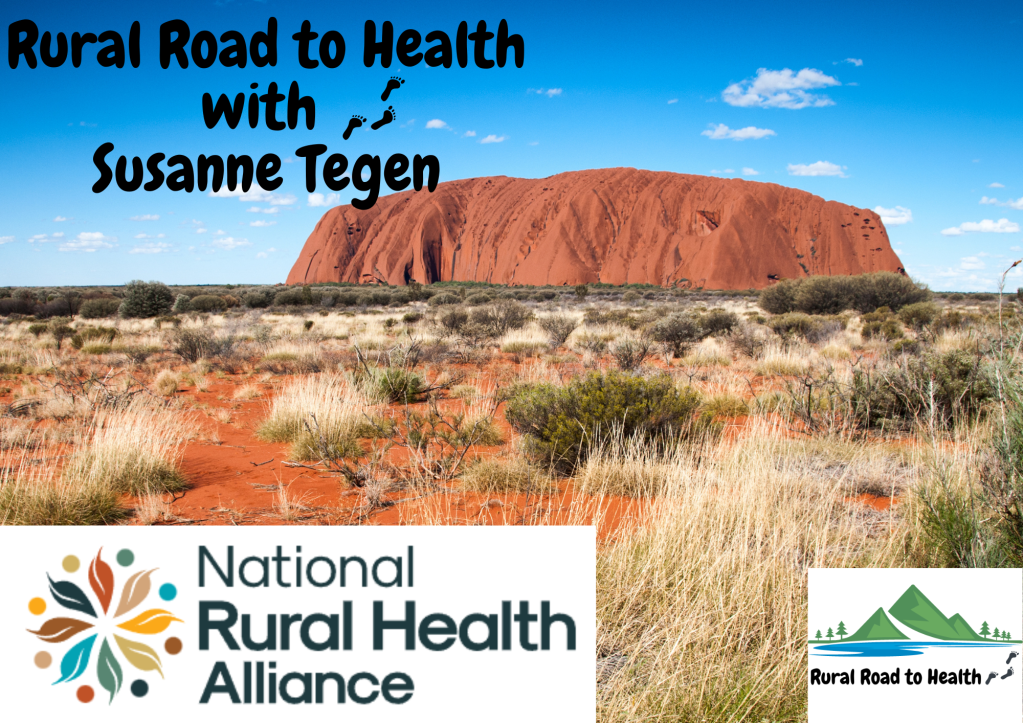
Susanne Tegen is the CEO of the National Rural Health Alliance in Australia.
She shares her experiences of living in rural Australia, and talks about the work of NRHA and how they have become a leading voice in advocating for rural communities and rural health.
Available 30th January 2025.
Welcome to Season 3 of the Rural Road to Health!
Find out what we will be talking about this season.
Episodes will be released on the 10th, 20th and 30th of each month between January and August 2025.
Available 20th January 2025.
Season 2 Wrap Up
Highlights from the second season of the Rural Road to Health Podcast. Learn what is planned for season 3.
Available 10th December 2024.

Tony Joy is the founder of Durian, an NGO focused on empowering rural women to become self-sufficient by providing them with the knowledge and skills needed to transform their local waste into a means of livelihood.
Available 20th November 2024.
Sadie Lavelle Cafferkey is a registered nurse working on in the Republic of Ireland. She is currently doing a PhD with Trinity College Dublin. Her project is looking at developing integrated nurse led addiction services for rural communities.
Available 10th November 2024.
Dr Juan Barranco is a rural family doctor in Andalucía, Spain. He will talk about rural medicine in Spain, the rural section in SemFYC and the upcoming rural forum.
Available 30th October 2024.
Prof. Jean Ross is a professor of nursing at Otago Polytechnic in New Zealand. She is a member of the Global Rural Nursing Exchange Network leadership team.
She talks about rural nursing in New Zealand and about the development of GRNEN.
Available 20th October 2024.

Gréanne Leeftink is an assistant professor within the department Industrial Engineering and Business Information Systems, in the CHOIR research centre at the University of Twente. Her research focus is on healthcare process optimization, using Operations Management/Operations Research techniques.
We explore how mathematical models can be used in rural healthcare settings.
Available 10th October 2024.
Cristobal Escalona is director at Balloon Lab at Balloon Latam, a social enterprise supporting rural innovation and sustainable development in rural areas of Chile.
We talk about how social entrepreneurship can build social capital, and how they have found a way to measure intangible assets in the community by developing a community resilience index.
Available 20th September 2024.
Dr Anette Fosse is a rural GP and the director of the Norwegian Centre for Rural Medicine. We talk about rural primary care in Norway, research on rural medical education and rural locums.
Available 10th September 2024.
Dr Rebecca Orr is an academic GP from Northern Ireland who focuses on farmers’ health. She is also the Chair of the Agri Rural Health Forum in Northern Ireland.
We talk about farmers’ health and the research that she has been doing in collaboration with farmers on health behaviours and cardiometabolic disease.
Available 30th August 2024.
Melanie Costas is the founder and CEO of Rural Mental Health Matters, a social enterprise focused on tackling mental and physical health inequality in rural England and Wales. We talk about the challenges faced by rural communities when it comes to mental health and disability and possible solutions for addressing them.
Available 20th August 2024.

Dr Miriam and Malachy Dolan run a social farm in Northern Ireland. They share their experiences with social farming and how social farming can benefit rural communities and farmers.
Available 10th August 2024.

Catriona Crawford is a therapeutic radiographer by training, she is working with the Farming Community Network in Northern Ireland on the Rural Communities Cancer Project. This project partners with Macmillan Cancer Support to raise awareness of the signs and symptoms of cancer, the need for screening, and support that is available following a cancer diagnosis.
Available 20th July 2024.
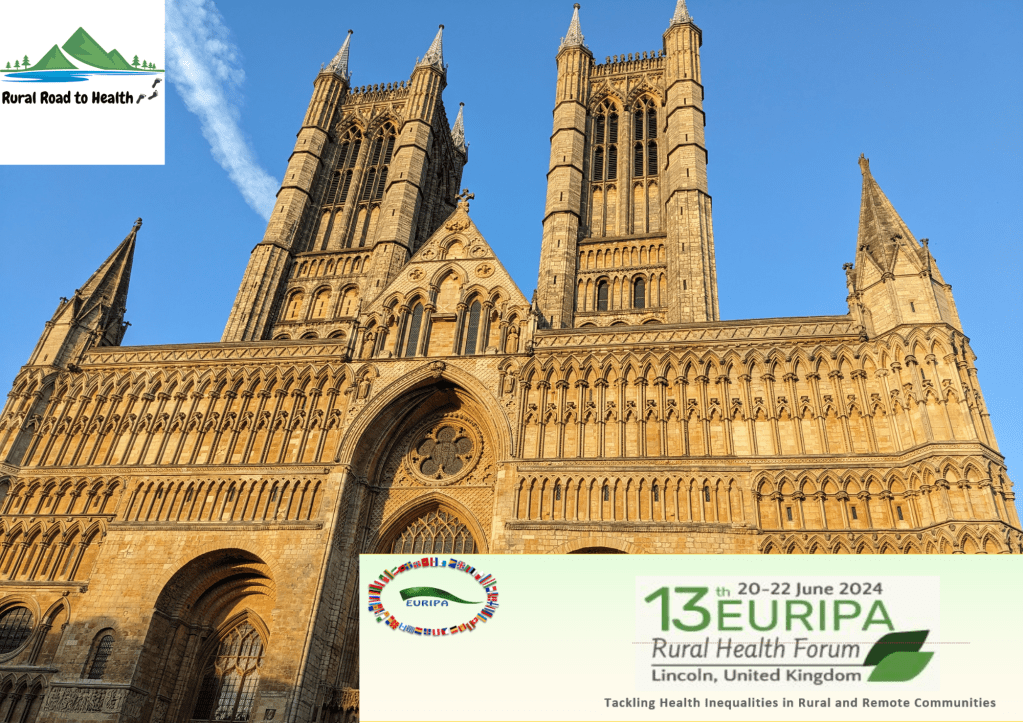
13th EURIPA Rural Health Forum Highlights
Lincoln Institute for Rural and Coastal Health
EURIPA Lincoln Statement 2024
European Rural Health Academic Network
Available 10th July 2024.
 The Rural Road to Health